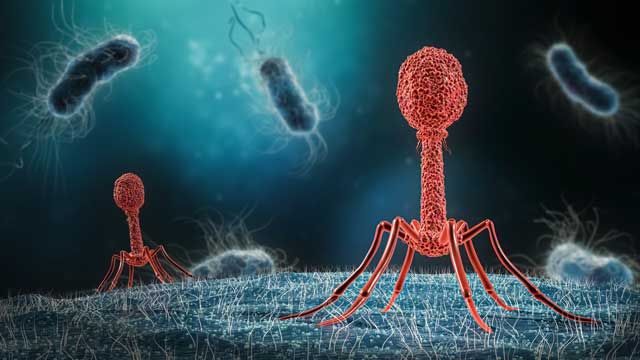
In recent years, the medical field has faced an unprecedented challenge due to the rise of antibiotic resistance, which complicates the treatment of bacterial infections. However, scientists are rediscovering phage therapy, a method that utilizes bacteriophages to eliminate pathogenic bacteria. This novel approach has been revitalized through advancements in artificial intelligence (AI), leading to the development of a model capable of predicting the optimal phage cocktails for individual patients.
The Relevance of Phage Therapy
A growing concern within healthcare is the emergence of antibiotic-resistant bacteria, often referred to as “superbugs.” These strains, exemplified by Escherichia coli, represent a significant public health challenge. Researchers at the Institut Pasteur, Inserm, and the Paris Public Hospital Network (AP-HP) have embarked on a quest to harness the specificity of phage therapy, which uses viruses that infect only bacteria.
AI’s Role in Enhancing Phage Therapy
Recent research, published on October 31, 2024, in the journal Nature Microbiology, indicates a breakthrough by training an AI model that tailors phage selections based on bacterial genomic information. This model aims to streamline personalized therapy, addressing the complexities inherent in the diverse nature of phages and their host bacteria.
Insights from Researchers
Baptiste Gaborieau, an intensive care specialist at Louis Mourier Hospital, shared insights on the historical context of phage therapy, noting that its decline in favor of antibiotics during the 20th century has shifted. He stated, ‘Over the past 20 years, after being promoted by WHO and with clinical trials launched recently, phage therapy has once again been sparking interest.’
Understanding Bacteria-Phage Interactions
One of the most significant hurdles researchers faced was determining the specific interactions between various phages and bacterial strains. The team analyzed 403 diverse E. coli strains alongside 96 phages to compile a comprehensive dataset over two years. Aude Bernheim, head of the Institut Pasteur’s Molecular Diversity of Microbes laboratory, explained, ‘We studied 350,000 interactions and successfully identified the characteristics in the bacterial genome likely to predict phage efficacy.’
Promising Results and Future Directions
The AI model successfully predicted phage efficacy with 85% accuracy just by analyzing the bacterial DNA. Notably, when testing the model on E. coli strains responsible for pneumonia, it achieved a 90% success rate in selecting effective phage cocktails.
The Path Forward
As researchers continue to refine the AI framework, plans are underway to extend its applications to other pathogenic bacteria to broaden the scope of personalized phage therapies. As Aude Bernheim remarked, ‘We hope to be able to extend it to other pathogenic bacteria, since our AI model has been designed to adapt easily to other scenarios.’
This innovative approach underscores the potential for AI to reshape modern medicine by offering targeted treatments in the fight against antibiotic-resistant infections, heralding a new era in patient care.


