
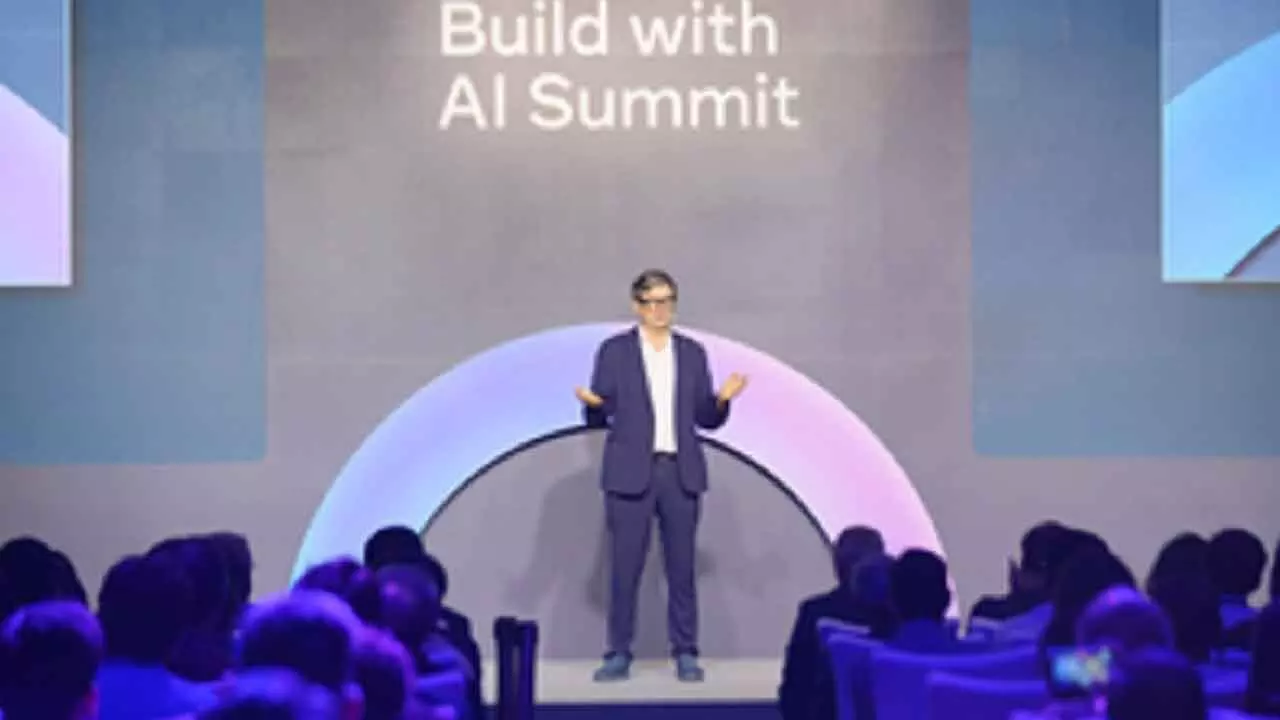
AI Revolution Still on the Horizon
Seoul: Yann LeCun, the chief artificial intelligence (AI) scientist at Meta Platforms, delivered a striking message during the 2024 K-Science and Technology Global Forum in Seoul. Addressing attendees, he asserted that ‘the real AI revolution has not yet arrived,’ urging governmental bodies not to enact regulations that could hinder technological growth.
The Future of AI Interaction
In his keynote, LeCun expressed optimism for a future where ‘every single one of our interactions with the digital world will be mediated by AI assistants.’ He emphasized the necessity for systems to achieve intelligence comparable to that of humans.
Recognizing AI Limitations
LeCun, a pioneer in the field, highlighted the restrictions of current generative AIs based on large language models (LLMs), like OpenAI’s ChatGPT. He noted that these systems, while adept at processing language, struggle with understanding the complexities of the physical world. ‘LLMs can deal with language because it’s simple and discrete, but they cannot tackle the intricacies of real-world scenarios,’ he elaborated.
Innovations at Meta
To bridge these gaps, Meta is focused on developing an objective-driven AI featuring a new architecture aimed at comprehending physical environments through observation, akin to early childhood learning. LeCun emphasized, ‘We need collaborative global efforts to train AI systems,’ warning against a monopolized training landscape dominated by single entities.
The Call for Open Source AI
In advocating for a cooperative approach, he stated, ‘We can’t have a single entity training these models,’ urging global collaboration on AI technology. Furthermore, he cautioned that premature regulations could ‘kill open source’ innovation, asserting a lack of evidence supporting inherent dangers of AI systems.
Conclusion
As the AI landscape continues to evolve, the dialogue surrounding innovation versus regulation remains crucial. The insights from LeCun serve as a foundational perspective in navigating this dynamic terrain, urging collaboration and open-source development in the pursuit of advancements in AI technology.


