
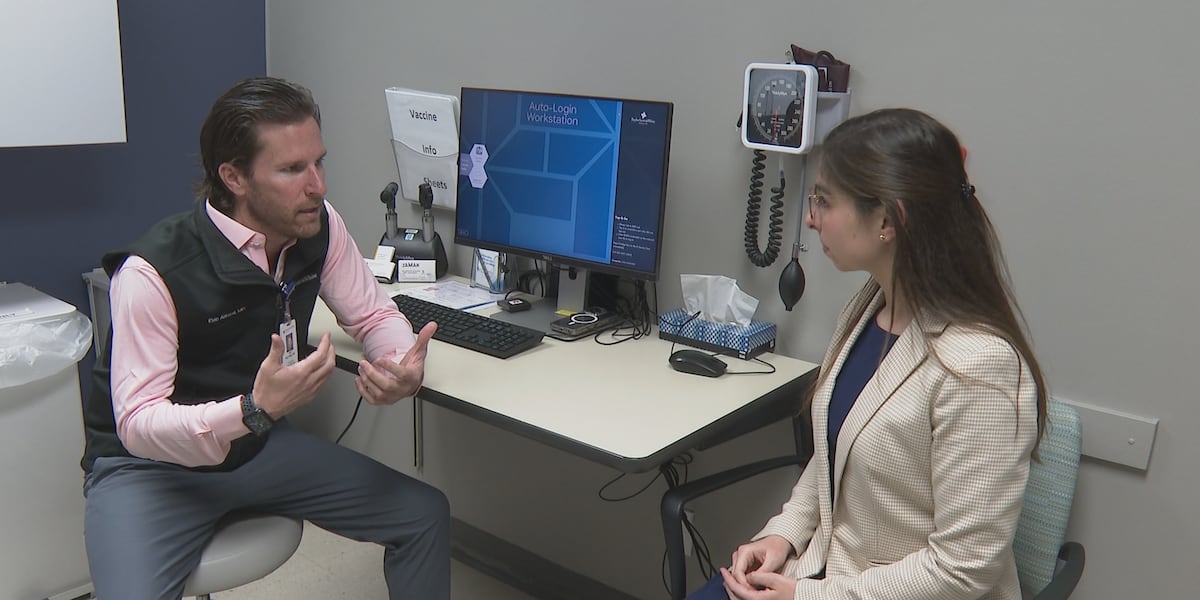
BRENHAM, Texas — New technological advancements are shaping healthcare facilities in the Brazos Valley, with the Baylor Scott & White Clinic in Brenham taking notable strides in improving patient care through artificial intelligence.
Revolutionizing Patient Interactions
Doctors at the clinic are now employing an AI technology known as Ambient Listening, designed to efficiently record medical notes during discussions between healthcare providers and their patients. This innovative tool is activated via smartphones, capturing essential medical information during consultations and subsequently uploading it to the patient’s medical record.
Regional medical director Eric Alford detailed the benefits of this tool, stating, ‘I can talk about politics, religion, the patient’s private lives, personal life, how their kids are doing if they went fishing the weekend before; whatever the case is, and all that gets taken out of the note.’ He emphasized the system’s ability to funnel out unnecessary details not pertinent to patient care.
Enhancing Care and Reducing Burnout
Dr. Alford noted that this AI tool dramatically enhances patient care, with accurate notes sent to patients within 20 seconds after their appointments. ‘When I realized what capabilities this had to help providers, probably more than they’ve ever been helped in my lifetime and probably most physician’s lifetime, that is what got me interested in the project,’ he commented.
Since the implementation of this technology roughly a year ago, the Brenham clinic reported a significant decrease of 70% in burnout among its providers. Dr. Alford stated, ‘I’ve never seen anything that has reduced burnout as much as this has.’ As a result, providers at the clinic have been able to see an additional one to five patients weekly, contributing to a noticeable increase in patient access, unexpectedly beneficial for the healthcare community.
AI’s Role in the Military
In a similar spirit of innovation, military researchers are also harnessing the power of AI. Armed Forces personnel are currently developing an AI device specifically designed to guide the delivery of pain management drugs on the battlefield, particularly for cases wherein experienced medical staff may not be available.
Dr. Jose Salinas, the lead scientist on this project, explained, ‘If you look at what’s happening in Ukraine, medical teams have to be constantly on the move. Providing solutions will increase mobility and reduce the manpower required to monitor and manage patients.’ The device will assist personnel in administering local anesthetics quickly and effectively, supporting those injured in combat scenarios.
Salinas elaborated, ‘The moment we start giving systemic medications that alter perception, we have to take the weapon away. But if the service member has a clear mind, they can still assist.’ Advancements like these could provide critical response capabilities in scenarios where time and expertise are limited.
The Future of AI in Patient Care
As the healthcare industry strives to address staff shortages and increasing demands, Dr. Alford’s warning emphasizes the urgency of adopting such technology: ‘If organizations don’t start deploying some of this within their system, the opportunities to recruit and retain providers are going to be diminished.’ The Baylor Scott & White Brenham clinic’s approach underscores the potential for AI to transform not only patient care within hospitals but also broader implications in military and emergency response scenarios.


- 0 Comments
- Military Medicine