
China Ramps Up AI Development Amid Trade Tensions
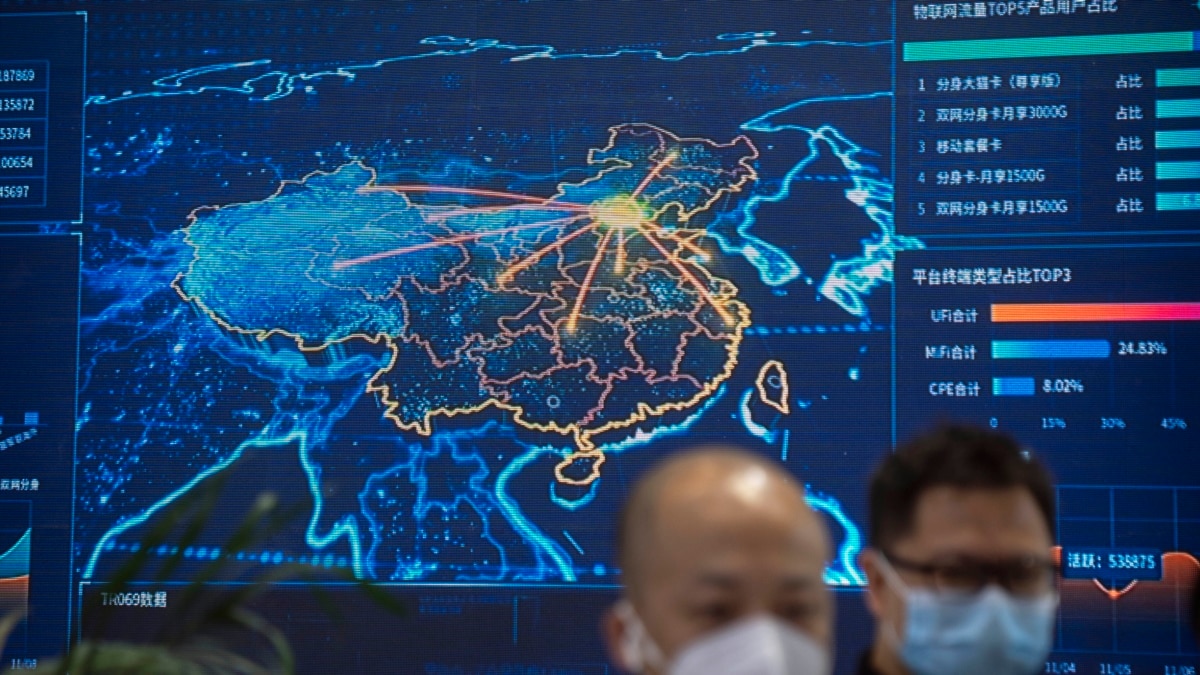
Encouraged by the enthusiastic reception of its DeepSeek artificial intelligence platform earlier this year, China’s leaders are actively pushing tech companies to harness AI technology to compete against the United States and other nations in both business and military arenas.
Following the shake-up of Wall Street, where Nvidia investors lost $589 billion, China aims to utilize AI as a strategic tool to cope with U.S. restrictions on its business.
According to Lourdes Casanova, director of Cornell University’s Emerging Markets Institute, ‘The government in China works directly with the private sector and universities in the advancement and deployment of AI technology, reducing their dependence on imports of high-tech products.’
Recently, several new AI models have been rolled out, including Manus, which experts suggest can rival ChatGPT, showing that DeepSeek is as efficient as ChatGPT despite using older Nvidia chips, which the U.S. has restricted.
Jeffrey Towson, from TechMoat Consulting, stated, ‘China and the U.S. have pulled way out front in the AI race. China was once one to two years behind; now, it’s likely just two to three months behind.’
The Role of Government in AI Strategy
Established in 2017, China’s AI development program aimed to make the country a global leader by 2030. The ‘Next Generation Artificial Intelligence Development Plan’ emphasizes the comprehensive adoption of AI across different sectors to stimulate economic transformation.
Rogier Creemers, assistant professor at Leiden University, remarked, ‘China has the most elaborate AI strategy compared to any other country.’ The establishment of a National Computing Power Grid allows Chinese AI firms to invest less in computing power compared to U.S. companies that operate independently.
Rising Competition in AI
ChatGPT’s recent advancements have sparked intense competition among Chinese tech giants. Baidu’s chief, Robin Li, expressed concerns, revealing that his company feels ‘huge pressure and a sense of crisis’ aimed at narrowing the gap with global leaders.
Towson further commented on potential future dominance, saying, ‘AI plus robotics is where China may take a leading edge, just as it did in electric vehicles.’
Government Engagement and Challenges
President Xi Jinping has been proactive in calling private sector leaders to showcase their talent in navigating economic challenges and U.S. restrictions. However, Creemers warns that media censorship could limit the AI development’s diversity due to restricted data availability.
Despite these challenges, China is focusing on specialized software for healthcare and other sectors, enhancing diagnostic capabilities while navigating political censorship.
Building an Independent Tech Sector
Casanova estimates that it may not be too long before China can independently produce advanced chips necessary for AI functions, with firms like Huawei demonstrating their capacity to manufacture advanced chips despite U.S. restrictions.
Towson expressed confidence in China’s ability to build a self-sufficient semiconductor supply chain, advancing faster than anticipated.
Moreover, AI applications are expanding into military areas, particularly within the Chinese air force, which employs AI for biometric screenings in pilot selection.
As consolidation in the field of AI continues, analysts project a competitive landscape where China’s advancements may reshape the tech industry on a global scale.


- 0 Comments
- U.S. Relations