
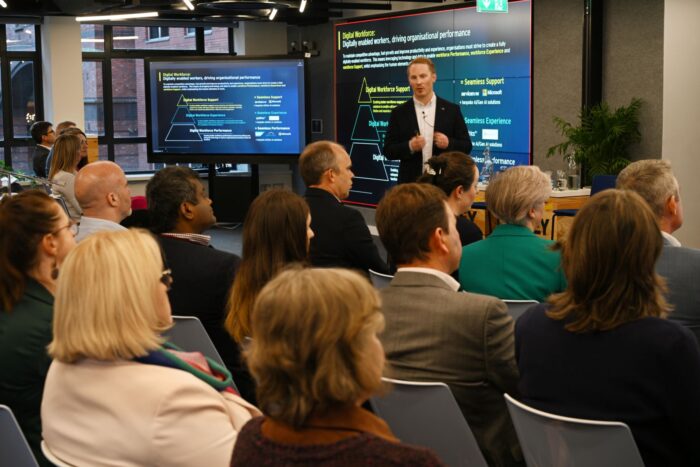
Embracing the New Wave of Technology
As organizations navigate the shifting landscape of technology, the integration of Artificial Intelligence (AI) and data-driven decision-making is becoming increasingly vital. This transformation is not uniform; different businesses are finding unique paths in their digital journeys.
Insights from EY Ireland
At EY Ireland, the impact of generative AI is clear, especially following its rise in late 2022. Frank O’Keeffe, managing partner at EY Ireland, remarked, ‘Generative AI has surged in popularity among our clients since winter 2022. Its role in reshaping how businesses operate cannot be overstated.’
O’Keeffe emphasized the dual challenge of harnessing technology while remaining vigilant about the ‘hype versus reality’. ‘No one wants to be first, nor do they want to be last, but we must all strive to stay relevant,’ he added.
Case Study: St. James’s Hospital
One practical application of AI in Ireland can be seen at St. James’s Hospital. Fiona Kearney, the laboratory manager, highlighted the labor-intensive nature of their operations, stating, ‘On average, our technicians process around 5,000 samples daily with limited time,’ further adding that improvements have been made with digital records.
Kearney noted, ‘Implementing electronic patient records has significantly reduced the time taken for processing MRSA samples from nine hours to just two.’ She believes that transitioning to AI could further revolutionize pathology.
Generative AI Adoption at Kerry Group
The Kerry Group is also exploring generative AI through trials of Microsoft 365 Copilot. Ashling Sheridan, leading data science initiatives, shared that the new technology could streamline processes significantly. ‘We’ve found that integrating tools like Copilot has saved our employees over an hour each week on mundane tasks,’ she explained.
Training and Immersive Technologies at ESB Networks
Meanwhile, ESB Networks is deploying immersive technologies such as virtual reality for technician training. Sarah Claxton stated, ‘With the demand for skilled technicians growing, our live network training facility has doubled its training days since 2021,’ noting that the introduction of digital twins will enhance training efficiency.
Conclusion
These examples reflect a broader trend in Ireland, highlighting that while technologies like AI and immersive tech present challenges, they also offer immense potential for efficiency and growth. As Frank O’Keeffe concluded, ‘It’s essential for organizations to adapt, train their people, and stay ahead in this new technology landscape.’


- 0 Comments
- Ireland