
US-China Tech Rivalry in 2024: AI, Semiconductors, and Clean Energy Dominate
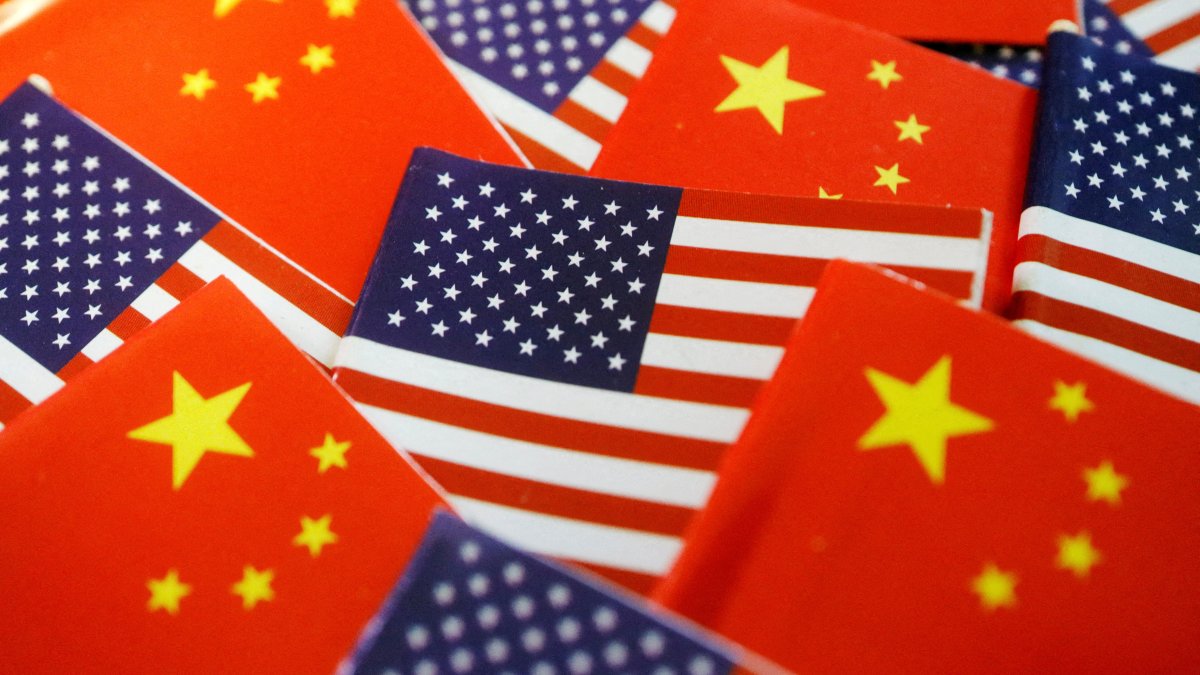
In 2024, the fierce competition between the United States and China for technological supremacy took center stage, particularly in strategic sectors such as artificial intelligence (AI), semiconductors, and clean energy technologies.
The startup ecosystem saw both nations investing heavily in AI and semiconductor technologies, while Europe focused a significant portion of its investment deals in Germany, France, and the United Kingdom.
In the U.S., Anduril secured a $1.5 billion investment deal to enhance its leadership in AI-driven defense technologies. Additionally, companies like OpenAI and industry leaders such as NVIDIA, Google, and Microsoft continued to expand U.S. influence in generative AI by developing cutting-edge hardware and software infrastructure.
Semiconductor War Intensifies
The drive for robust computer chips critical for AI applications has intensified the semiconductor rivalry. Major U.S. firms like NVIDIA dominate AI-powered chips, while China works through companies like SMIC and Huawei to lessen its reliance on U.S. technology.
The U.S. has collaborated with European firms like ASML for semiconductor production, which has bolstered local manufacturing thanks to the CHIPS Act initiated in 2022, enhancing companies like Intel, AMD, and Qualcomm.
Despite U.S. sanctions, China has been ramping up domestic production, with SMIC making strides to achieve 7 nm chip production and Huawei developing its chip technology.
China’s billions in semiconductor investment aim to reduce dependence on imports, while U.S. companies continue to lead in high-performance chips.
According to CB Insights, global AI deals surged by 24% in Q3 2024, though funding took a hit, dropping by 29% as large funding rounds dwindled.
Control of Precious Metals and Clean Energy
As Huawei faces competition in smartphones, its automotive presence grows. U.S. export controls limit China’s access to technology, prompting new supply chains to be established in China.
The U.S. is also enhancing investments in renewable energy, with initiatives under the Inflation Reduction Act (IRA) promoting substantial clean energy investments.
China, leading in solar panel production and lithium battery technology, produces over 70% of the world’s solar panels.
Keen Focus on AI as a Strategic Technology
Goldman Sachs notes, ‘While the U.S., China, and Russia may not agree on many things, they all agree that AI can reshape power balances.’ This is echoed by research organizations highlighting AI’s strategic importance for national goals.
China’s approach centers on state funding and planning, contrasting with the U.S. model—which is driven by private enterprise.


- 0 Comments
- US China Relations